We are expected to work later into our lives and retire later. At the same time, the number of people on sick leave and sickness benefit increases with age. There are huge differences between industries, and women are more affected than men. Those with existing health issues when their sick leave begins may find it more difficult to get back to work. In short, the issue of a sustainable working life is one of the societal challenges of our time.
“You can’t have a single solution that suits everyone. How can we manage someone’s return to work later in working life in a person-centred way, so that they can retire while at the top if they want to?” says Mathilda Björk, professor of occupational therapy at LiU.
She is one of the researchers behind the new research centre RELATE, launched thanks to a grant of SEK 50 million from the Swedish government research funding agency Forte. The funding runs for six years, with the possibility of a further four-year extension.
Collaboration between research areas
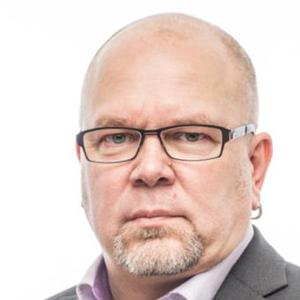
In this research initiative, the age limit for who is seen as an older employee has deliberately been set low – at 55 – in order for the research to address early sick leave, recurrent sick leave and insufficient adaptation in the workplace, and contribute to more people over this age being able to continue working.Photographer: Johan Sjöholm
The research centre will facilitate collaboration between researchers from different areas such as health sciences, occupational therapy, rehabilitation, organisation and leadership, elderly research and technology.
“All researchers in the research programme have a LiU connection. We wanted to gather LiU’s excellent research into this area, and show that we have the strength to create a really strong and new centre. We will be located on Campus Norrköping, which has a strong interdisciplinary tradition, good collaboration with other actors, and works with testbeds for research, which we will also develop,” says Mathilda Björk.
From individual to policy
The researchers will seek long-term, scalable and person-centred solutions at three different levels. At the individual level, the focus is on health and efforts for the individual to be able to return to work, prevent further sick leave, and similar issues.
This includes developing mobile test beds and exploring how technology can be used to follow an individual to capture early signals that a work situation can pose risks to health. Among others, Senior Associate Professor Martin Holmberg at the Department of Science and Technology will contribute his research to this part of the research centre.
At the workplace level, the researchers are looking at how workplaces should be organised to enable older employees to have a sustainable working life, and how interventions in the workplace can be designed. The third level is about policies and how they should be designed to create the right conditions. The centre will be under the lead of Andreas Motel-Klingebiel, professor of ageing and later life at the Department of Culture and Society (IKOS), Mattias Elg, professor at the Department of Management and Engineering (IEI) and Andreas Wallo, professor of education at the Department of Behavioural Sciences and Learning (IBL), as well as several other LiU researchers.
Research rooted in reality
“The design of the research programme is based on co-creation. We are assisted by individuals in the role of employees, workplaces and various policy representatives to focus on the research issues we are going to investigate,” says Mathilda Björk.
She emphasises that the research will be anchored in society, so as to lead to actual improvements in working life and welfare systems. Strong regional cooperation with Region Östergötland, Funktionsrätt Östergötland, Norrköping Science Park and Samordningsförbundet is an important foundation. The goal is to create solutions that allow more people to work longer – in a way that benefits both the individual and society.
“We will also focus a lot on engaging in community outreach activities by organising activities at the centre. It’s really important that we get our research out there, so that it can actually make a difference.”