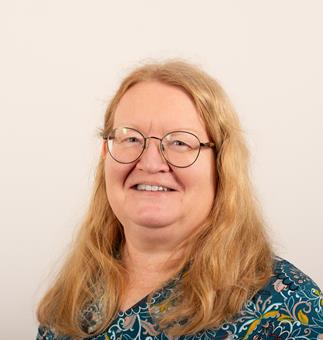
Photo of Emma Lindkvist

Emma Lindkvist

Assistant Professor

By studying biogas from different systemic perspectives, we can determine how biogas provides the greatest environmental and economic benefits. Both nationally and internationally.

Energy system analysis shows where biogas is most beneficial

Biogas is a renewable energy source produced from biomass.

Biogas production also yields digestate, which can be used as biofertilizer. Using the digestate allows for the recycling of nitrogen and phosphorus back into farmland. The biogas produced can be used to generate heat and electricity, or upgraded to natural gas quality and then injected into the natural gas grid or used as vehicle fuel.

In my research, I study biogas production from various systemic perspectives. Among other things, I have examined whether the production and use of biogas at a food processing facility is more profitable if it takes place on-site at the facility rather than at an external biogas plant. This was also analyzed from an environmental perspective. The results showed that it is better—from both an economic and an environmental perspective—to produce biogas on-site at food processing facilities and to use that biogas on-site.

Management of Organic Byproducts

Another project involves studying how organic byproducts (waste) from various food industries should be managed. Currently, much of this organic waste is used in animal feed production, composted, or incinerated at waste-to-energy plants. In this study, I examine whether the alternative of using the waste for biogas production is better from an economic, energy, and environmental perspective. I also look at how the system’s performance changes if the biogas produced is used to generate electricity and heat or is upgraded to vehicle fuel.

Energy Audits at Biogas Plants

I have also helped develop a method for conducting energy audits at biogas plants. Among other things, the method outlines how to break down the various processes at the plant when presenting the energy audit results—both to gain a clearer picture of the individual plant and to enable comparisons between different plants.Being able to compare biogas plants with one another—both within Sweden and abroad—can be valuable when it comes to knowledge transfer. The terms used to describe biogas plants in Sweden do not correspond to those used in other European countries, which can lead to misunderstandings and missed opportunities for sharing experiences.With a common terminology—at least within Europe—it would be easier for researchers and professionals in the biogas industry to compare biogas plants in different countries and thereby increase the exchange of knowledge. A first step toward this has been taken, as we have developed a framework for categorizing biogas plants. The next step will be to propose a common terminology.

Teaching

I teach several courses offered as part of the Bachelor of Science in Energy, Environment, and Management program and the Master’s program in Sustainability Engineering and Management.

Short texts

Academic Degree

Master of Science in Ecosystem Engineering, LTH 2013

Publications

2026

Johan Nordensvärd, Emma Lindkvist, Fayas Malik Kanchiralla, Patrik Thollander, Patrik Rohdin, Benjamin K. Sovacool, Erin Heinz, Frauke Urban, Niklas Arvidsson, Muhammad Asif, Weimin Zhang, Thomas Kwan, Daniel H. B. Gamez (2026) Energy efficiency first for homes? Public priorities, barriers and residential energy choices in six European countries Energy Efficiency, Vol. 19, Article 74 (Article in journal) https://dx.doi.org/10.1007/s12053-026-10478-7
Mikael Säberg, Emma Lindkvist, Roozbeh Feiz, Patrik Thollander (2026) Reply to Missing the goal: Comments on a comparative life cycle assessment of natural and artificial football turf, by Säberg et al. (2025) Cleaner Environmental Systems, Vol. 23, Article 100525 (Article in journal) https://dx.doi.org/10.1016/j.cesys.2026.100525
Thomas Magnusson, Wisdom Kanda, Axel Lindfors, Sofia Dahlgren, Hans Andersson, Emma Lindkvist (2026) Biogasscenarier: Produktion och användning av biogas i Sverige till 2035 (Report) https://dx.doi.org/10.3384/9789181186635
Emma Lindkvist, Patrik Thollander, Mikael Säberg (2026) Barriers to and drivers for environmental, energy, and water management practices in football facilities-Toward increased sustainability in the sports community FRONTIERS IN SUSTAINABILITY, Vol. 7, Article 1845069 (Article in journal) https://dx.doi.org/10.3389/frsus.2026.1845069
Sofia Dahlgren, Emma Lindkvist (2026) From fossil fuels to renewables: an analysis of fuel transition in Swedish heavy transport and industry Biofuels, Vol. 17, p. 214-225 (Article in journal) https://dx.doi.org/10.1080/17597269.2025.2523641

Research

Education

Coworkers

News

Organisation