Exit year, Human-Computer Interaction and Design with Extended Reality program, EIT Digital Master School.
Creating Extended Reality Experiences for the future requires engineering and design at the highest levels. The HCID/XR exit year at Linköping University offers just that.
Niklas Rönnberg
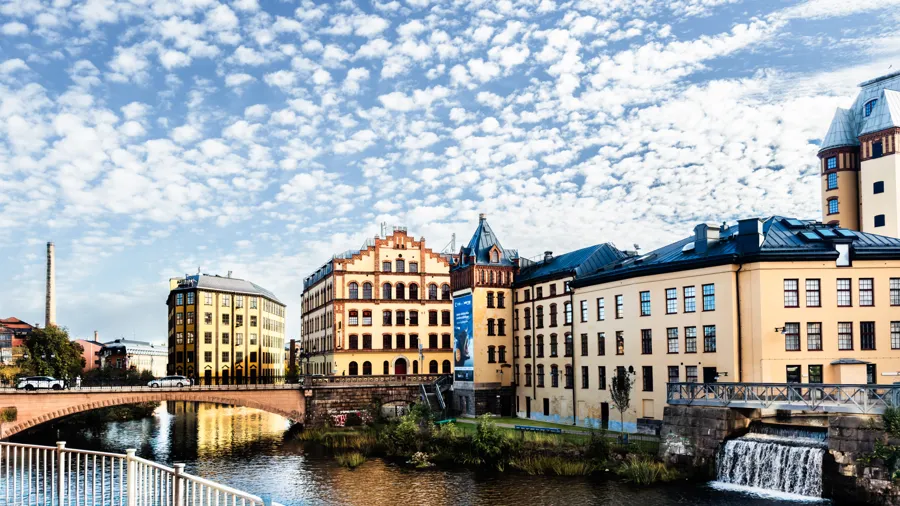
The exit year is hosted by the division of Media and Information Technology at Campus Norrköping of Linköping University, an international leader in research and education on immersive visualization, extended reality and visual media design. Courses are given in collaboration with Visualiseringscenter C and Visual Sweden.
Visualiseringscenter C is an internationally renowned science center for the public, specializing in visualization. Located at Campus Norrköping and collaborating closely with LiU research and teaching, it offers a 100-seat dome theater, three floors of interactive exhibits, an exploranation laboratory, a price-winning production unit for educational immersive media and public outreach, and more.
Peter Holgersson AB
The national innovation hub Visual Sweden organizes 100+ companies in research and teaching collaborations with Linköping University in the fields of visualization and image analysis. A recent initiative is Immersive Sweden, sharing competences and supporting innovation in extended reality for professional and societal benefits.
Thor Balkhed
Students in the Master School exit year on Extended Reality Experiences will be working in this vibrant environment at Campus Norrköping of Linköping University, together with master students from our programs in media technology and visual media design. We are looking forward to your contributions!
This is our current list of courses in the Extended Reality Experiences (XRE) exit year. Formal finalisation is pending, but the list gives a strong indication of what will be included.
Advanced XRE Design
In this course we take a design approach to the inception and creation of design concepts for extended reality experiences. Key ideas include immersion, embodiment, presence, and spatiality. Explorative design is promoted through innovative design methods and prototyping techniques.
Advanced XRE Development
In this course we study and explore the technical and communicative considerations in media production for immersive environments such as head mounted displays, domes, VR cubes and curved screen environments. The course is based on practical experimentation with state-of-the-art media technologies.
Foundations of XRE Design and Development
The course provides knowledge of foundational methods, techniques and tools in XRE Design and in XRE Development. It addresses individual knowledge needs for each student to span the full integration of design and development.
XR Methods and Programming (elective)
The course covers display systems and their principles, from desktop to large-scale VR theaters and domes, principles for effective implementation, methods for interaction and how sound and touch are used to create a convincing and useful immersive environment.
Sound Design for User Experience (elective)
In this course we study and explore sound as a communicative and experiential element in user experience design. The course addresses both technical and design-oriented perspectives on how sound can be used in user interfaces, extended reality, visualization, games, and other interactive and immersive systems.
Innovation and Entrepreneurship in XRE Design and Development
The course addresses theories, concepts and tools in design-based innovation and entrepreneurship with applications to extended reality related design and development projects. It provides theoretical and analytical support for project work in XRE design and development courses.

 Niklas Rönnberg
 Peter Holgersson AB
 Thor Balkhed

