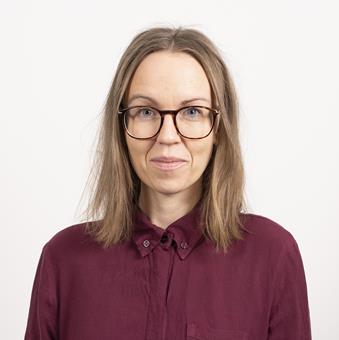
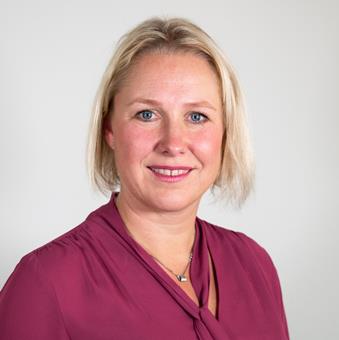
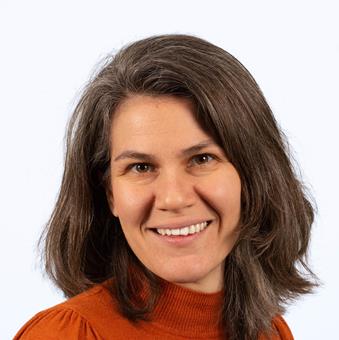
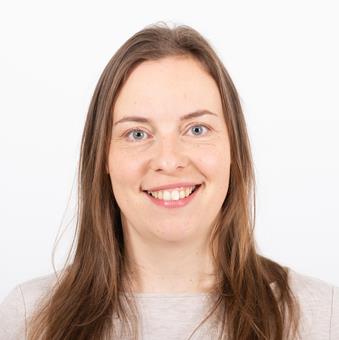
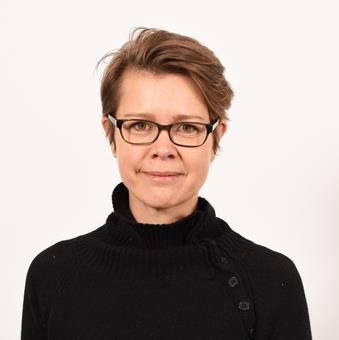
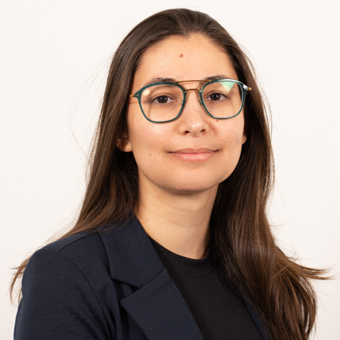
Photo of Sofia Dahlgren

Sofia Dahlgren

Associate Professor

My research is about the use of biogas in Sweden, especially focusing on transportation (buses, trucks and marine shipping) and manufacturing industries.

The role of biogas in the Swedish transition towards renewable energy

We need a transition towards an energy system based on more renewable energy. There is no renewable fuel that at the moment can, alone, replace all the fossil fuels that are used today, and there will need to be a system of several fuels working together in order to achieve large-scale change. 

Based on current discussion on electric vehicles and electrification, a major role will be played by electricity. However, there are still occurrences when substituting to electricity is not optimal and when other renewable fuels might be better suited. One of these renewable fuels is biogas, which, apart from being produced from waste, have several other benefits for society – such as hygenization of waste and production of fertilizers. Biogas is not a solution that will work as a major substitution for all fossil fuels, but rather as a complement to other renewable energy technologies in areas where it might be better suited than other technologies.

My research is about on what role biogas may have in a renewable energy system. More specifically, my research studies questions like how one can evaluate whether biogas is suitable in a specific context, what determines if it is more or less easy to introduce biogas and what areas in a renewable energy system that might be suitable for biogas use. The focus is on Sweden and especially on different kind of transportation (buses, trucks and ships) as well as manufacturing industries.

Publications

2026

Thomas Magnusson, Wisdom Kanda, Hans Andersson, Sofia Dahlgren (2026) Cumulative processes in multi-system transitions: expanding value chains and limits to growth for sustainable alternatives Environmental Innovation and Societal Transitions, Vol. 60, Article 101124 (Article in journal) https://dx.doi.org/10.1016/j.eist.2026.101124
Sofia Dahlgren, Emma Lindkvist (2026) From fossil fuels to renewables: an analysis of fuel transition in Swedish heavy transport and industry Biofuels, Vol. 17, p. 214-225 (Article in journal) https://dx.doi.org/10.1080/17597269.2025.2523641

2025

Annelie Carlson, Sofia Dahlgren, Erik Sundin, L. S. Meldgaard (2025) Environmental Evaluation of Remanufactured Automotive Parts: Comparative LCAs of Five Product Groups EcoDesign for Circular Value Creation: Volume II, p. 411-423 (Chapter in book) https://dx.doi.org/10.1007/978-981-97-9076-0_24

2023

Annelie Carlson, Sofia Dahlgren, Line Meldgaard, Erik Sundin (2023) Environmental evaluation of remanufactured automotive parts - A consistent assessment of a collection of products (Conference paper)

2022

Sofia Dahlgren, Jonas Ammenberg (2022) Environmental Considerations Regarding Freight Transport among Buyers of Transport Services in Sweden Sustainability, Vol. 14, Article 11244 (Article in journal) https://dx.doi.org/10.3390/su141811244

Research

My research primarily concerns the use of biogas in Sweden, with a particular focus on transport (e.g. lorries and shipping) and industry.

Biogas is something we can produce from waste products, and it also offers other benefits to society – such as the hygienisation of waste and the production of fertiliser.

Biogas is not a solution that will be able to serve as the primary replacement for all fossil fuels, but rather as a complement to other renewable fuels in areas where biogas is more suitable. But what role can biogas play in a future renewable energy system?

As well as biogas research, I have also been involved in a few other projects, such as life-cycle assessments of remanufactured car parts and flow analyses of technical equipment within organisations.
Teaching

I am an examiner and course coordinator for the course Environmental Engineering (TKMJ24), which is a foundation course in environmental studies taken by students on various engineering programmes, amongst others. I am also co-coordinator for the course Sustainable Development and Entrepreneurship (TKMJ51), a foundation course on sustainable entrepreneurship on the Master of Science in Industrial Economics programme.
In addition to that, I also teach on a number of other courses; for example, I give a lecture and lead a seminar on sustainable transport in the course Sustainable Urban Development (TKMJ48), I deliver a module on life-cycle analysis in the course IT for Sustainability (TINF01), and so on. I also supervise bachelor’s and master’s theses every year, and previous master’s theses I have supervised have covered topics such as the use of liquid biogas in shipping, multi-criteria analysis of alternative fuels for buses, and life-cycle analysis of military fire-control sights.

Coworkers

News

Organisation