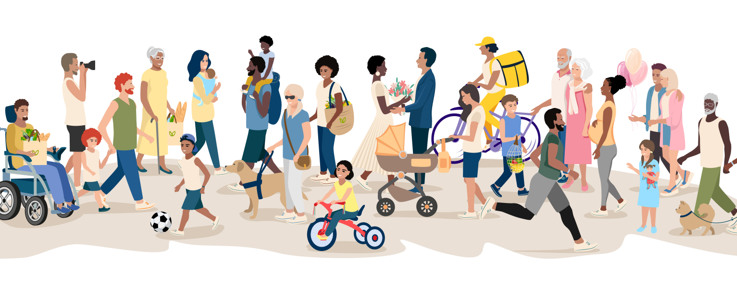
The project focuses on how individuals are exposed to different social groups in several key environments throughout life – in neighbourhoods, schools and workplaces. This so-called exposure segregation influences the resources, networks and opportunities that individuals encounter over the course of their lives.
Previous research has often studied segregation within a single domain, such as residential segregation or school segregation. Instead, this project analyses how segregation in different contexts is interconnected and reinforces itself over time. The researchers also study how such patterns may be transmitted between generations.
The project uses extensive Swedish register data to analyse individuals’ life trajectories from childhood to adulthood. Using advanced statistical methods and simulation models, the researchers examine how different experiences of segregation affect people’s future opportunities and how segregation develops at the societal level.
By identifying both mechanisms that reproduce segregation and situations in which such patterns are broken, the project will generate knowledge relevant to policy measures aimed at reducing social inequality and segregation.
Project aim
The aim of the project is to increase understanding of how segregation in different areas of society – neighbourhoods, schools and workplaces – interacts across the life course and between generations, and how these processes contribute to creating and maintaining social inequality.
Objectives
The project objectives are to:
- analyse how exposure segregation emerges and is reproduced across different life domains and over time
- identify groups and life trajectories in which typical patterns of segregation are broken and where social mobility occurs
- examine how individual life trajectories and experiences of segregation influence segregation at the societal level
- contribute new theoretical and methodological knowledge about segregation and social inequality
- provide research-based insights that may contribute to more effective policy measures to address segregation.


