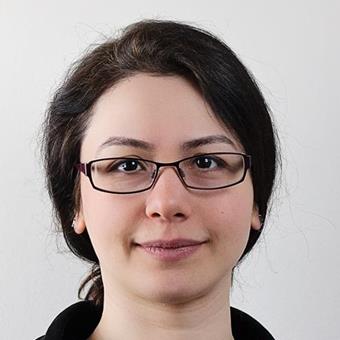
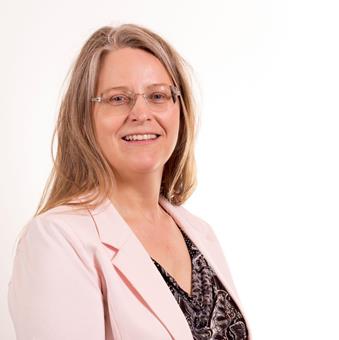
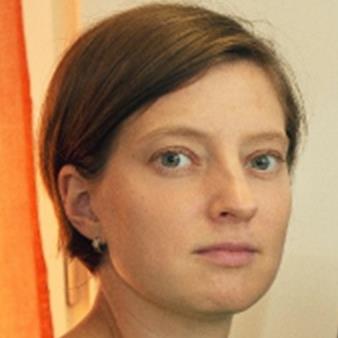
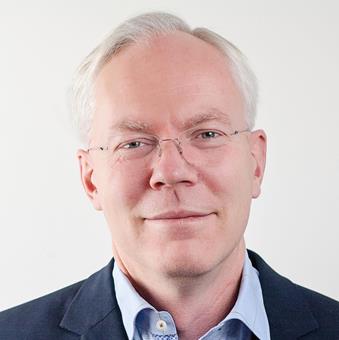
Photo of Elin Nyman

Elin Nyman

Head of Department, Associate Professor, Docent

My research integrates systems biology, artificial intelligence, metabolomics, and mechanistic modelling to develop predictive models of human biology, with applications in precision medicine, digital twins, 3Rs, and forensic science.

Profile

Elin Nyman has established an internationally connected and interdisciplinary research programme at the interface of systems biology, artificial intelligence, metabolomics, and precision medicine. She has extensive postdoc experiences from Harvard Medical School, Oregon Health & Science University, as well as AstraZeneca. Her research has attracted competitive funding from major national funders, including the Swedish Research Council, the Swedish Heart-Lung Foundation, Forska Utan Djurförsök, and strategic programmes at Linköping University.

Her contributions have been recognised through several awards, including the IMED Science Award from AstraZeneca, the Swedish Association for Diabetology Award for Best Preclinical Thesis, and the Forum Scientium Transformer Award.

A man and a woman sitting next to each other. Per Wistbo Nibell
 
In 2025, she also supervised the master's thesis that received the Polhems Prize, one of Sweden's most prestigious distinctions for engineering degree projects, reflecting her commitment to excellence in both research and mentorship.

Elin Nyman is also Head of Department of Biomedical Engineering.

Selected Scientific Contributions

Elin Nyman develops AI-driven and mechanistic models of human biology to advance precision medicine, forensic science, and our understanding of complex physiological systems

Integrating mechanistic modelling and biological data

Nyman's research has developed novel methods for mechanistic modelling of complex biological systems. These approaches have been applied to inflammation, metabolism, adipocyte signaling, and drug responses, both in academia and in pharmaceutical companies, generating new biological insights while providing reusable computational frameworks.

Advancing forensic metabolomics through AI

Nyman is co-applicant of the 13 MSEK research environment in forensic science. She has contributed to establishing forensic metabolomics as a powerful tool for estimating post-mortem interval and characterizing causes of death. The recent study published in Nature Communications demonstrated how machine learning applied to large-scale metabolomics data can substantially improve prediction of post-mortem interval.

Development of digital twin methodologies

Nyman has focused on translating systems biology approaches into digital twin technologies for precision medicine. Through funding obtained from the e.g. the Swedish Research Council, she has developed computational strategies that combine mechanistic models with patient-specific data to support individualized predictions and hypothesis generation.

Research

Research projects

Publications

Highlighted publication: Rasmus Magnusson, Carl Söderberg, Liam J. Ward, Jenny Arpe, Fredrik C. Kugelberg, Albert Elmsjö, Henrik Green & Elin Nyman (2026) The human metabolome and machine learning improves predictions of the post-mortem interval. Nature Communications, Vol. 17, Article 1504 (Article in journal). https://doi.org/10.1038/s41467-026-69158-w

2026

Elin Nyman, Rasmus Magnusson, Tomas Strömberg, Carl Johan Östgren, Sara Bergstrand, Hanna Jonasson (2026) Sex differences in microvascular patterns associated with low- and high-risk for cardiovascular disease Biology of Sex Differences, Vol. 17, Article 138 (Article in journal) https://dx.doi.org/10.1186/s13293-026-00955-0
Ralph E. C. Monte, Rasmus Magnusson, Carl Soderberg, Henrik Green, Albert Elmsjo, Elin Nyman (2026) Detecting and subtyping ketoacidosis from metabolomic patterns in forensic casework Scientific Reports, Vol. 16, Article 11607 (Article in journal) https://dx.doi.org/10.1038/s41598-026-45073-4
Henrik Podéus Derelöv, Christian Simonsson, Gerd Jakobsson, Robert Kronstrand, Elin Nyman, William Lövfors, Gunnar Cedersund (2026) A digital twin framework for forensic reconstruction of alcohol intake via fast and slow metabolite kinetics Scientific Reports, Vol. 16, Article 9336 (Article in journal) https://dx.doi.org/10.1038/s41598-026-44093-4
Rasmus Magnusson, Carl Soderberg, Liam Ward, Jenny Arpe, Fredrik Kugelberg, Albert Elmsjö, Henrik Green, Elin Nyman (2026) The human metabolome and machine learning improves predictions of the post-mortem interval Nature Communications, Vol. 17, Article 1504 (Article in journal) https://dx.doi.org/10.1038/s41467-026-69158-w

2024

Christian Simonsson, Elin Nyman, Peter Gennemark, Peter Gustafsson, Ingrid Hotz, Mattias Ekstedt, Peter Lundberg, Gunnar Cedersund (2024) A unified framework for prediction of liver steatosis dynamics in response to different diet and drug interventions Clinical Nutrition, Vol. 43, p. 1532-1543 (Article in journal) https://dx.doi.org/10.1016/j.clnu.2024.05.017

Teaching

I supervise students at bachelor's and master's level within both the Faculty of Science and Engineering and the Faculty of Medicine and Health Sciences.

I am examiner for the following courses:

News

Ekologiskt odlad lök.

30 April 2026

Sustainability, AI and the future of food - LiU researchers share their research

At the fair on the future of gastronomy, three LiU researchers share their research on AI on dairy farms, the role of emotions in sustainability education, and digital twins that can replace animal experiments.

A man with glasses is looking at himself in the mirror.

29 April 2026

Digital twin could reveal alcohol consumption in crime cases

Using a digital twin, it is possible to predict with greater precision than at present how much alcohol a person has consumed and at what time. The study was conducted by researchers at LiU and the Swedish National Board of Forensic Medicine.

En person i labbrock som håller i en flaska.

24 February 2026

AI provides a more precise time of death

Artificial intelligence can be used to provide a more precise time of death, which can be crucial in e.g. murder investigations. The AI model is trained on so-called metabolites in thousands of blood samples from real deaths.

Organisation