MAX IV Photon Science Infrastructure

Arealphoto of MAX IV in Lund, Sweden

The MAX IV Laboratory is a new generation large infrastructure synchrotron radiation research facility for materials science that replaced the previous MAX-laboratory that consisted of the MAX I, II and III storage rings. 

The main sources for spectroscopy and diffraction experiments at MAX IV are the large 3 GeV and the small 1.5 GeV storage rings with state-of-the-art low emittance for the production of hard and soft x-rays, respectively. The long linac injector also provides short pulses to a short pulse facility and a possible future free electron laser (FEL).

One of the strategic goals of Advanced Functional Materials (AFM) at LiU is to improve the infrastructure in materials science in Sweden. In particular, we make a large and over time increasing investment in the MAX IV project. In 2010, we invested through strategic grants 1.53 MSEK, in 2011 2.44 MSEK and in 2012 and beyond we invested 4.27 MSEK/year.

Our goal is to ensure that the AFM researchers as well as the materials science community as a whole can obtain an improved access to state-of-the-art synchrotron radiation based techniques, with an emphasis on the soft x-ray region.

Funding by Swedish Universities for Phase I beamlines 2013-2022, 16 MSEK/year (total 162 MSEK with KAW funding: 400 MSEK): LiU ~1 MSEK/year (total: 10 MSEK).

Funding for running budget of “MAX IV in-kind program” for beamlines 2019-2023: 2.9 MSEK/year from LiU

MAX IV Sekretariat at LiU (with chairman Martin Magnuson and secretary Lina Rogström)

PhD Courses: Synchrotron Radiation 7.5 ECTS
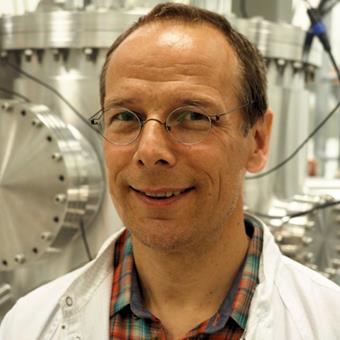
Members of LiU Large Infrastructure Advisory Committee (LiAC)

Events

Projects

VERITAS beamline

The Very High Resolution, Intensity and Stability (VERITAS) beamline at MAX IV is designed for advanced crystal momentum–resolved (q-dependent) Resonant Inelastic X-ray Scattering (q-RIXS) measurements of bulk electronic band structures, as well as efficient X-ray absorption spectroscopy in fluorescence mode.

The beamline and its endstation were developed through a collaboration between Uppsala University and Linköping University. Uppsala University was responsible for the development of the X-ray spectrometer, while Linköping University contributed a sample preparation chamber enabling advanced materials synthesis via Physical Vapour Deposition (PVD). This in situ magnetron sputtering deposition system was specifically designed to minimize surface oxidation of samples prior to measurement.

The VERITAS beamline extends over more than 50 meters, allowing for a highly focused beam at the sample position. Key features include the capability for simultaneous scanning of the monochromator and undulator, rapid switching of polarization between vertical and horizontal orientations using an elliptically polarizing undulator (EPU), and a high energy resolution characterized by a superior resolving power.

For the VERITAS beamline at the 3 GeV storage ring, Linköping University provided in-kind contributions in the form of an Advanced Materials Synthesis Chamber (Martin Magnuson, Lars-Åke Näslund, Andrej Furlan, and Lars Hultman).

BLOCH Beamline

The endstation at the BLOCH beamline is equipped with a state-of-the-art DA30 electron analyzer from Scienta, enabling high-resolution angle-resolved photoelectron spectroscopy (ARPES) studies. It also features a six-axis manipulator (Carving, Specs) that permits sample cooling using liquid helium, a scanning tunneling microscope (STM) with variable temperature control from Omicron, and low-energy electron diffraction (LEED) capabilities.

In addition to the primary analysis chamber for STM and ARPES experiments, the endstation includes two dedicated chambers for advanced sample preparation. The BLOCH beamline and its endstation have been in operation since January 2019.

For the BLOCH beamline at the 1.5 GeV storage ring, Linköping University contributed in-kind to the construction of the experimental chamber (Roger Uhrberg).

Martin Magnuson, Per Eklund, Craig Polley (2025)

Physical Review Letters , Vol.134 Continue to DOI

Jalil Shah, Weimin Wang, Hafiz Muhammad Sohail, Roger Uhrberg (2021)

Physical Review B , Vol.104 Continue to DOI

Jalil Shah, Weimin Wang, Hafiz Muhammad Sohail, Roger Uhrberg (2020)

2D Materials , Vol.7 Continue to DOI

BALDER beamline

In 2019, researchers from Linköping University (LiU) became the first official users of the BALDER beamline. They investigated the temperature-dependent electronic structure and chemical bonding in MXenes using X-ray Absorption Near Edge Structure (XANES) and Extended X-ray Absorption Fine Structure (EXAFS), with the results published in Physical Review Research in 2020

Since then, LiU researchers have remained active users of the BALDER beamline, conducting XANES and EXAFS studies on a wide range of materials, including hard coatings, amorphous compounds, perovskites, and related systems.

Rui Shu, Xiaofu Zhang, Ferenc Tasnadi, Weine Olovsson, Smita Gangaprasad Rao, Grzegorz Greczynski, Arnaud Le Febvrier, Martin Magnuson, Per Eklund (2024)

Annalen der Physik , Vol.534 Continue to DOI

Lina Rogström, Maiara Moreno, J. M. Andersson, M. P. Johansson-Jöesaar, Magnus Odén, K. Klementiev, Lars-Åke Näslund, Martin Magnuson (2023)

Applied Surface Science , Vol.612 Continue to DOI

Rui Shu, Daniel Lundin, Binbin Xin, Mauricio A. Sortica, Daniel Primetzhofer, Martin Magnuson, Arnaud Le Febvrier, Per Eklund (2021)

ACS Applied Electronic Materials , Vol.3 , s.2748-2756 Continue to DOI

Martin Magnuson, Lars-Åke Näslund (2020)

Physical Review Research , Vol.2 , s.033516-1-033516-10 Continue to DOI

SPECIES beamline

Researchers from Linköping University (LiU) have extensively explored the operational capabilities of the gas cell at the Ambient Pressure X-ray Photoelectron Spectroscopy (APXPS) branch of the SPECIES beamline.

In addition, LiU researchers regularly conduct Resonant Inelastic X-ray Scattering (RIXS) and X-ray Absorption Spectroscopy (XAS) experiments at the RIXS branch of SPECIES, demonstrating sustained and advanced use of the facility with several publications.

Susmita Chowdhury, Hector Guerra Yanez, Sanath Kumar Honnali, Grzegorz Greczynski, Per O A Persson, Arnaud Le Febvrier, Martin Magnuson, Per Eklund (2025)

Applied Materials Today , Vol.44 Continue to DOI

Lars-Åke Näslund, Esko Kokkonen, Martin Magnuson (2025)

Applied Surface Science , Vol.684 Continue to DOI

Susmita Chowdhury, Niraj Kumar Singh, Sanath Kumar Honnali, Grzegorz Greczynski, Per Eklund, Arnaud le Febvrier, Martin Magnuson (2024)

Physical Review B , Vol.110 Continue to DOI

Susmita Chowdhury, Victor Hjort, Rui Shu, Grzegorz Greczynski, Arnaud Le Febvrier, Per Eklund, Martin Magnuson (2023)

Physical Review B , Vol.108 Continue to DOI

Lars-Åke Näslund, Mikko-Heikki Mikkelä, Esko Kokkonen, Martin Magnuson (2021)

2D Materials , Vol.8 Continue to DOI

HIPPIE beamline

LiU researchers have been using the Ambient pressure X-ray photoelectron spectroscopy (APXPS) at the HIPPIE beamline.

BioMAX beamline

LiU researchers have been using the X-ray macromolecular crystallography beamline.

FlexPES beamline

LiU researchers have been using the Flexible PhotoElectron Spectroscopy beamline for materials science.

Yongzhen Chen, Xianjie Liu, Slawomir Braun, Mats Fahlman (2021)

ACS Applied Materials and Interfaces , Vol.13 , s.47218-47225 Continue to DOI

DiffMAX beamline

KAW has proposed to support the construction of the DiffMAX beamline by SEK 110 MSEK, provided that Swedish industry can merge and finance operations in the future of approximately SEK 11 MSEK/year. At present, a full-time researcher at MAX IV, beamline scientist Olivier Balmes, is working on the project. For the DiffMAX beamline at the 3 GeV ring, LiU can contribute with in-kind for the experimental chamber (Jens Birch).

P21 beamline at PETRA III in Hamburg

The "Swedish beamline" P21 at PETRA III is a high-energy beamline of 40-150 keV for in-situ material characterization using X-ray scattering techniques. It is located in the new "Hall East" and is the longest beamline (100 m from the front-end and 200 m from the source) and there is room for three insertion devices (ID); an in-vacuum undulator, a canted undulator and in the future a wiggler. There are many benefits of this beamline including large penetration depth, non-destructive measurement of bulk, deeply buried layer, no beryllium windows necessary, large Ewald sphere, high time resolution, small beam size, and that the measurements can be done in air instead of vacuum at these high photon energies. LiU will have access to a large number of hours, funded by the Röntgen Ångström Consortium (RAC).

The Center for X-rays in Swedish Materials Science (CeXS) is the academic host for the Swedish Materials Science beamline which is a national research infrastructure. CeXS is jointly operated by LiU and KTH in collaboration with Uppsala.

Sweden's privileged access allowance

Sweden’s total privileged access allowance is equivalent to the use of 1.5 beamlines per year, which amounts to 5 300 hours of beam time at PETRA III. These hours can be allocated between all DESY-operated beamlines at PETRA III. The upper limit of Swedish privileged access is 70% of the total user time at the Swedish beamline's P21.2 beam line branch, 35% of the time at the Swedish beamline's P21.1 branch, and 20% of the total user time the other DESY-operated beamlines. Read more at https://www.cexs.kth.se/access/apply-for-privileged-beam-time-1.1042075.

Torkel Stenqvist, Johan Hektor, Sara Bylund, Robert Moberg, Marten O. M. Edwards, Stephen A. Hall, Lars-Åke Näslund (2021)

Advanced Engineering Materials , Vol.23 Continue to DOI

Recent activities and in-kind contributions by LiU Large Infrastructure Advisory Committee (LiAC)

  • LiAC discussion meeting to plan and identify presentations at the MAX IV's visit to LiU on March 27:th 2026 and LiUs feedback on VR's questions for MAX IVs 10-year operation proposal, in Jordan-Fermi and on Teams, on Thursday, February 24th at 13-14, 2026.

  • LiAC discussion meeting in preparation for the upcoming URG meeting in Stockholm, in Jordan-Fermi and on Teams, on Monday June 26th at 13-14, 2025.

  • LiU Large Infrastructure Advisory Committee (LiAC) discussion meeting about SSUO, URG, MAX IV-U, April 11:th, 2024.

  • CeXS seminar day on the use of high energy X-rays in materials science, March 21, 2024

  • Discussion meeting about MAX IV from a LiU/IFM-perspective, November 12, 2021.

  • LiAC Teams meeting for input for LiUs 10-year strategy for MAX IV, June 23-26, 2021.

  • LiU Large Infrastructure Advisory Committee (LiAC) input meeting for MAX IV Strategy until 2030, June 3:rd, 2021.
  • LiU Large Infrastructure Advisory Committee (LiAC) meeting May 12:th -2020. Discussion about risk analysis and travel plans for beam times at MAX IV during Covid-19. How do we travel to MAX IV and avoid contact with other persons.
  • LiAC preparation meeting for SAC and URG, IFM, LiU, December 19, 2019.
  • Visit by MAX IV director Ian McNulty and Science Director Marjolein Thunnissen. Status presentation and in-kind discussions, Planck and Jordan-Fermi, IFM, LiU. 12:00-17:00, October 15, 2018
  • MAX IV in-kind discussions, Röntgen, P404, IFM, LiU, 08:30-10:00, April 26:th, 2018
  • MAX IV in-kind discussions, Röntgen, P404, IFM, LiU, 15:15-17:00 April 11:th, 2018
  • MAX IV in-kind discussions, Röntgen, P404, IFM, LiU, 15:15-17:00 February 7:th, 2018
  • Infrastructure meeting on MAX IV user operation on Friday, March 24:th, 13-15 IFM, in room Jordan-Fermi, 2017
  • Discussion on the next MAX IV beam line proposal at MAX IV, Infrastructure meeting on Thursday 23/6 at 9:15 in Jordan-Fermi, 2016
  • Workshop on MAX IV strategy, IFM, LiU, 9:15, June 23:rd, 2016
  • MAX IV beamline prioritiy discussions, IFM, LiU, 15:15 June 2:nd, 2016
  • Large Scale Infrastructure meeting on Input to the next MAX IV beam line proposal in October through our LiU University Reference Group (LiU-URG) at LiU Thursday 2/6 at 15:15 in Jordan-Fermi, 2016
  • Meeting on "National School in Neutron Scattering (GSn)” proposal to SSF, IFM, LiU, January 12:th 2016
  • Information meeting on "National School in Neutron Scattering (GSn)”, IFM, LiU, December 10:th, 2015
  • Local Committee meeting on Large Infrastructure, LiU IFM, 21 October 2015
  • Local Committee meeting on beamline priorities for phase 2, LiU IFM, 1 October 2013
  • Local Committee meeting on beamline priorities for phase 2b, LiU IFM, 14 February 2013
  • VERITAS experimental station meeting, Uppsala, 18 October 2012
  • VERITAS and MAX IV meeting at the building site, Lund, 15 June 2012
  • VERITAS control room design meeting with architect, MAX-lab, Lund, 8 March 2012
  • VERITAS coordination and design meeting at IFM, Linköping, 23 January 2012
  • Workshop on the "NanoMax Beamline, Hard X-ray Imaging" at MAX IV, AlbaNova, Stockholm, 18-19 October 2011
  • VERITAS coordination and design meeting at Ångström, Uppsala, 14 October 2011
  • Swedish-German Workshop on “The Challenge of Ambient Conditions”, Rosersberg Castle, 6-7 October 2011
  • Workshop on the Swedish beamline at "PETRA III, DESY", Hamburg, 29-30 August 2011
  • Swedish-German Workshop on “UHERIXS at PETRA III”, Rosersberg Castle, 9-10 June 2011
  • Seminar on the Swedish beamline at "PETRA III", Vetenskapsrådet, Stockholm, 2 February 2011
  • Presentation at the “VERITAS – beamline workshop”, Kista, 21 January 2011
  • Workshop on "Coherent Radiation for Imaging and Spectroscopy in the Röntgen-Ångström Cluster (RÅC)", Chalmerska huset, Gothenburg, 9 December 2010
  • Workshop on the Swedish beamline at "PETRA III”, Foresta Conference center, Lidingö, 25-26 October 2010
  • Preparation meeting for the workshop “Workshop on the Swedish beamline at PETRA III”, Röntgen, 5 October 2010
  • Seminar on the Swedish beamline at "PETRA III"”, Vetenskapsrådet, Stockholm, 30 September 2010
  • Preparation meeting for "beamline proposals at MAX IV", Zenit, Linköping, 7 May 2010
  • 2:nd meeting in the National Reference Group for MAX IV, 9 March 2010.
  • Workshop "beamlines at MAX IV", Scandic Star, Lund, 22-23 February 2010
  • Preparation meeting for the workshop "Beamlines at MAX IV", Zenit, Linköping, 2 February 2010
  • 1:st meeting in the National Reference Group for MAX IV, 26 January 2010.

Related information

Advanced Functional Materials (AFM)

MAX IV laboratory

PETRA III

The European Spallation Source (ESS) for neutron scattering

Swiss Light Source (SLS)

European Synchrotron Radiation Facility (ESRF)

Advanced Light Source (ALS)

SPring-8

Spectroscopy using Synchrotron Radiation

Innovative Materials Arena

The Swedish Synchrotron Users Organisation (SSUO)

MS2E

LINXS

CeXS