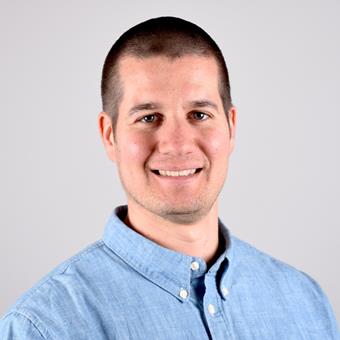
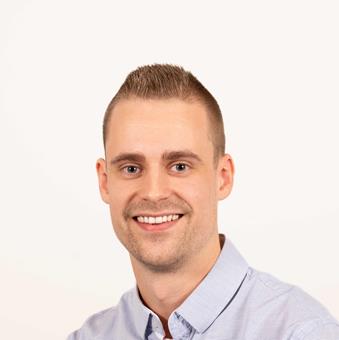
Samuel Kärnell
Assistant Professor
Hydraulic systems play a central role in everything from wheel loaders to aircraft. My research explores how these systems can be designed and controlled to meet new conditions, such as electrification and increased energy efficiency requirements.
Publications
2026
 Exploratory Analysis of Optimisation Results for the Multi-Pump System Using Data-Driven Methods
FLUID POWER: Enabling Future Technologies: 15TH INTERNATIONAL FLUID POWER CONFERENCE, Article 27
(Conference paper)
Exploratory Analysis of Optimisation Results for the Multi-Pump System Using Data-Driven Methods
FLUID POWER: Enabling Future Technologies: 15TH INTERNATIONAL FLUID POWER CONFERENCE, Article 27
(Conference paper)
 https://dx.doi.org/10.13052/rp-9788743814771A27
Editorial: Introduction to the SICFP'25 Special Issue
International Journal of Fluid Power, Vol. 27, p. v-v
(Article in journal)
https://dx.doi.org/10.13052/rp-9788743814771A27
Editorial: Introduction to the SICFP'25 Special Issue
International Journal of Fluid Power, Vol. 27, p. v-v
(Article in journal)
2025
Ripple Chambers in Multi-Quadrant Pump/Motors
JFPS International Journal of Fluid Power System, Vol. 18, p. 17-21
(Article in journal)
https://dx.doi.org/10.5739/jfpsij.18.17
Potential of Hydraulic Waste Heat Recovery for Cabin Comfort
The 19th Scandinavian International Conference on Fluid Power, SICFP'25
(Conference paper)
https://dx.doi.org/10.13052/rp-9788743808251A20
Modeling and Simulation of a Direct Heat Recovery System for Cabin Heating in Battery-Powered Mobile Machines
Proceedings of the 16th International Modelica&FMI Conference, p. 931-938
(Conference paper)
https://dx.doi.org/10.3384/ecp218931
Teaching
I am the course coordinator for TMHP51 - Hydraulic Servo Systems. You may encounter me in the following courses:
I am responsible for the courses TMHP02 – Fluid Power Systems and TMHP51 – Hydraulic Servo Systems. You might also run into me in other courses related to fluid power. Occasionally, you might even hear me sing about the subject: http://www.youtube.com/@SamuelKarnell