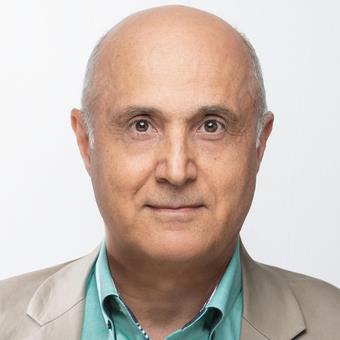
Photo of Peter Berggren

Peter Berggren

Adjunct Associate Professor, Docent

I study how people, organisations, and technical systems interact in complex and safety-critical environments.

Presentation

My research has a strong applied focus and is often conducted in close collaboration with stakeholders in healthcare, disaster medicine, total defence, international partnerships, and societal safety.

Cognitive science in practice

My research explores how people, organisations, and technical systems interact in complex and safety-critical contexts. The focus is on crisis management, collaboration, and decision-making: from planning and training to the management of real-world societal disruptions. A central component is combining studies of practice with the development and evaluation of simulations, exercises, and serious games to systematically strengthen individual and organisational capabilities.

​I approach these questions from a cognitive science perspective, in close integration with human factors and sociotechnical systems perspectives, to understand how people make sense of situations, coordinate actions, and make decisions under uncertainty and time pressure.

A key focus is how to develop:

  • crisis management, collaboration, and leadership
  • training, simulation, and evaluation as learning tools
  • decision-making and shared situational awareness
  • interaction between people, technology, and organisation


From exercise to system capability

A significant part of my research examines how simulation-based exercises can be used to develop capabilities in healthcare, disaster medicine, and societal safety. I study how exercises can support learning at multiple levels—individual, team, organisation, and system—and how collaboration between different actors can be trained and evaluated.

From individual to system

Outcomes in crisis management are not determined solely by individual decisions, but by how people, technology, and organisations interact. I therefore study crisis management and preparedness as sociotechnical systems—from individual sensemaking to strategic leadership and international partnerships. A particular interest is international capacity building, including Train-the-Trainer models and long-term organisational learning.



Publications

2026

Marie Hindorf, Ellen Liif, Carl-Oscar Jonson, Lars Lundberg, Anders Jonsson, Peter Berggren (2026) The effects of learning during Swedish naval training: a quantitative study of simulation-based exercises-a case study The Journal of Defence Modeling and Simulation: Applications, Methodology, Technology, Vol. 23, p. 271-281 (Article in journal) https://dx.doi.org/10.1177/15485129241288241

2025

Ruhija Hodza-Beganovic, Peter Berggren, S. Edelbring (2025) Contextualizing interprofessional competencies in the Balkans: Healthcare workers' understanding of the concepts based on an existing framework and a self-report instrument Journal of Interprofessional Education and Practice, Vol. 41, Article 100787 (Article in journal) https://dx.doi.org/10.1016/j.xjep.2025.100787
Ruhija Hodza-Beganovic, Peter Berggren, Samuel Edelbring (2025) The role of leadership in enhancing non-technical skills in healthcare: a qualitative study in a Balkan context Human Resources for Health, Vol. 23, Article 53 (Article in journal) https://dx.doi.org/10.1186/s12960-025-01022-2
Peter Berggren, David Myren, Björn Johansson (2025) Untangling scenario terminology to improve exerciseontologyacross domains: A suggested glossary to improve clarity, communication, and replicability in scenario-based studies 22nd International ISCRAM Conference: Managing and Responding to Coastal Disasters and Climate Change (Conference paper) https://dx.doi.org/10.59297/xnh95f90
Anton Björnqvist, Linnea Klingberg, Erik Prytz, Björn Johansson, Carl-Oscar Jonson, Jenny Pettersson, Jessica Frisk, Peter Berggren (2025) The Three Sub-Phases Before a Crisis: Evaluating Preparations for the COVID-19 Pandemic Through the Lens of High Reliability Organizationsand Resilience Engineering Proceedings of the 36th Annual Conference of the European Association of Cognitive Ergonomics: Critical reflection for a better tomorrow (Conference paper) https://dx.doi.org/10.1145/3746175.3746178

Research

News

About the division

Colleagues at HCS

About the department