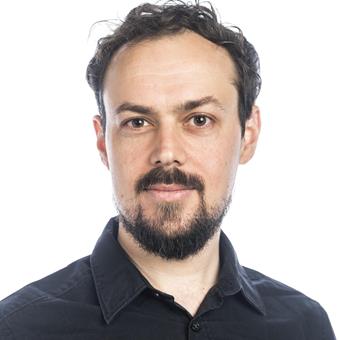
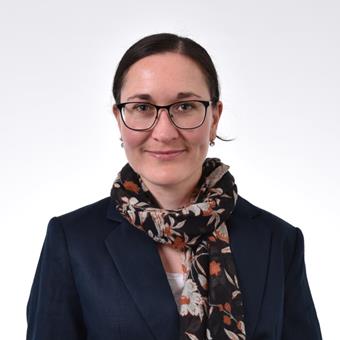
Photo of Peter Hedström

Peter Hedström

Professor

Peter Hedström is Professor of Analytical Sociology and the Founder of the Institute for Analytical Sociology.

The development of analytical sociology

My research focus on social networks and their role in explaining various social phenomena. The methodology of the social sciences is another area of interest, and I have been one of the driving forces behind the development of analytical sociology.

During the last few years, much of my research has focused on segregation processes. This research has been funded by grants from the European Research Council, the Swedish Research Council, and Riksbankens Jubileumsfond.

I received my PhD in Sociology at Harvard University. Before joining IAS I have held professor positions at the University of Chicago, Stockholm University, University of Oxford, Singapore Management University, and NYU Abu Dhabi. I am a fellow of the Royal Swedish Academy of Sciences, the Royal Swedish Academy of Letters, History and Antiquities, and the Norwegian Academy of Science and Letters.


CV

Research

Publications

Frequently cited works

Peter Hedström, Petri Ylikoski (2013)

Encyclopedia of Philosophy and the Social Sciences , s.27-30 Continue to DOI

Peter Hedström, Petri Ylikoski (2010)

Annual Review of Sociology , Vol.36 , s.49-67 Continue to DOI

Peter Hedström (2021)

Research Handbook on Analytical Sociology , s.490-505

Recent publikations

2025

Martin Arvidsson, Peter Hedström, Marc Keuschnigg (2025) Wide Social Influence and the Emergence of the Unexpected: An Empirical Test Using Spotify Data Sociological Science, Vol. 12, p. 715-742 (Article in journal) Continue to DOI
Selcan Mutgan, Peter Hedström, Martin Arvidsson (2025) Ethnic preferences, opportunity structures, and the school segregation process European Sociological Review (Article in journal) Continue to DOI

2022

Benjamin Jarvis, Marc Keuschnigg, Peter Hedström (2022) Analytical sociology amidst a computational social science revolution Handbook of Computational Social Science, Volume 1, p. 33-52 (Chapter in book) Continue to DOI

2021

Peter Hedström (2021) The past and future of analytical sociology Research Handbook on Analytical Sociology, p. 490-505 (Chapter in book)
Martin Arvidsson, F. Collet, Peter Hedström (2021) The Trojan-horse mechanism: How networks reduce gender segregation Science Advances, Vol. 7, Article eabf6730 (Article in journal) Continue to DOI

News

A woman looking at her mobilephone.

Wide social influence can make the unexpected happen

Sociologists from Linköping University analyse Spotify data to learn about the spreading of music and cultural change more generally.

Portrait of Peter Hedström och Maria Brandén, professors at the institute for analytical sociology

Contribute to new knowledge for meeting societal challenges

To break segregation, we need to understand what causes it. Maria Brandén and Peter Hedström use large amounts of data to study what happens at the individual level, and what that means at societal level.

Peter Hedström and Maria Brandén sits next to each other in a staircase.

IAS celebrates 10 years

It all started with taking risks. Now, ten years have passed since the Institute for analytical sociology (IAS) was founded."It feels like we have achieved a lot," comments Maria Brandén, senior associate professor.

Co-workers

Organisation